
The most frequently asked question we get: do genetically encoded lipid biosensors compete out cells’ native effector proteins?
Victoria Holmes and Morgan Ricci led a paper in JCB that answers this question:
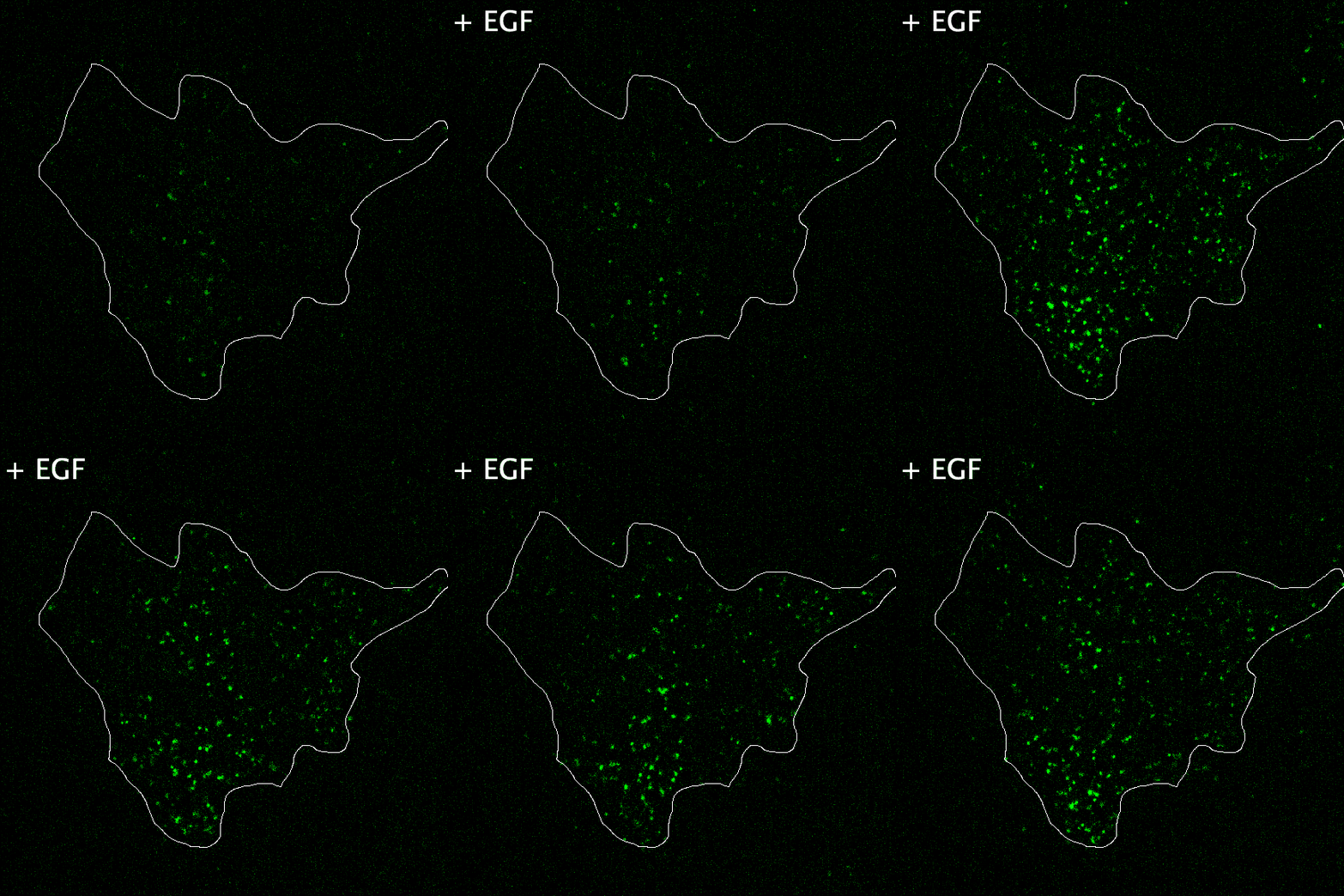
Morgan tagged endogenous AKT1 with NeonGreen. Expression is low enough that you see single molecules at the cell surface in TIRF, which are recruited by PIP3 when the cell is stimulated with EGF:
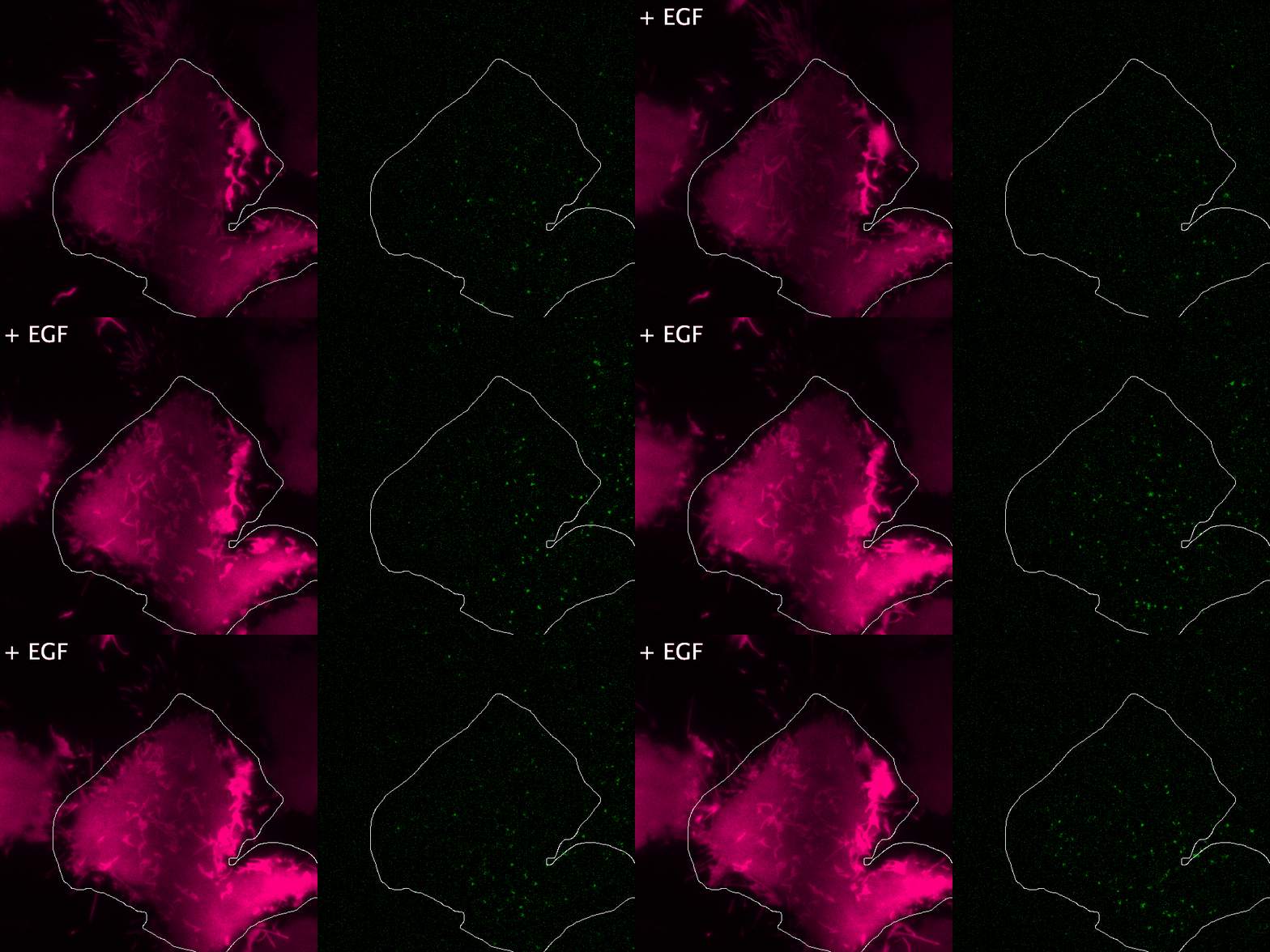
Now Victoria expressed the most popular PIP3 biosensor – the PH domain from the very same AKT1 protein (pink). The biosensor recruits very nicely with EGF, reporting PIP3 increases – but completely kills native AKT1 recruitment, as you see here:
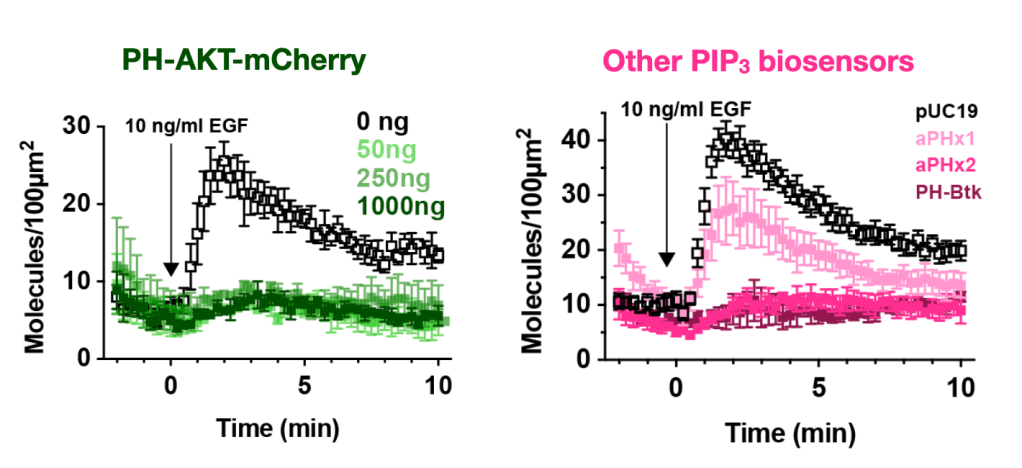
This happens with all of the PIP3 biosensors we tested, even the low-affinity ones:
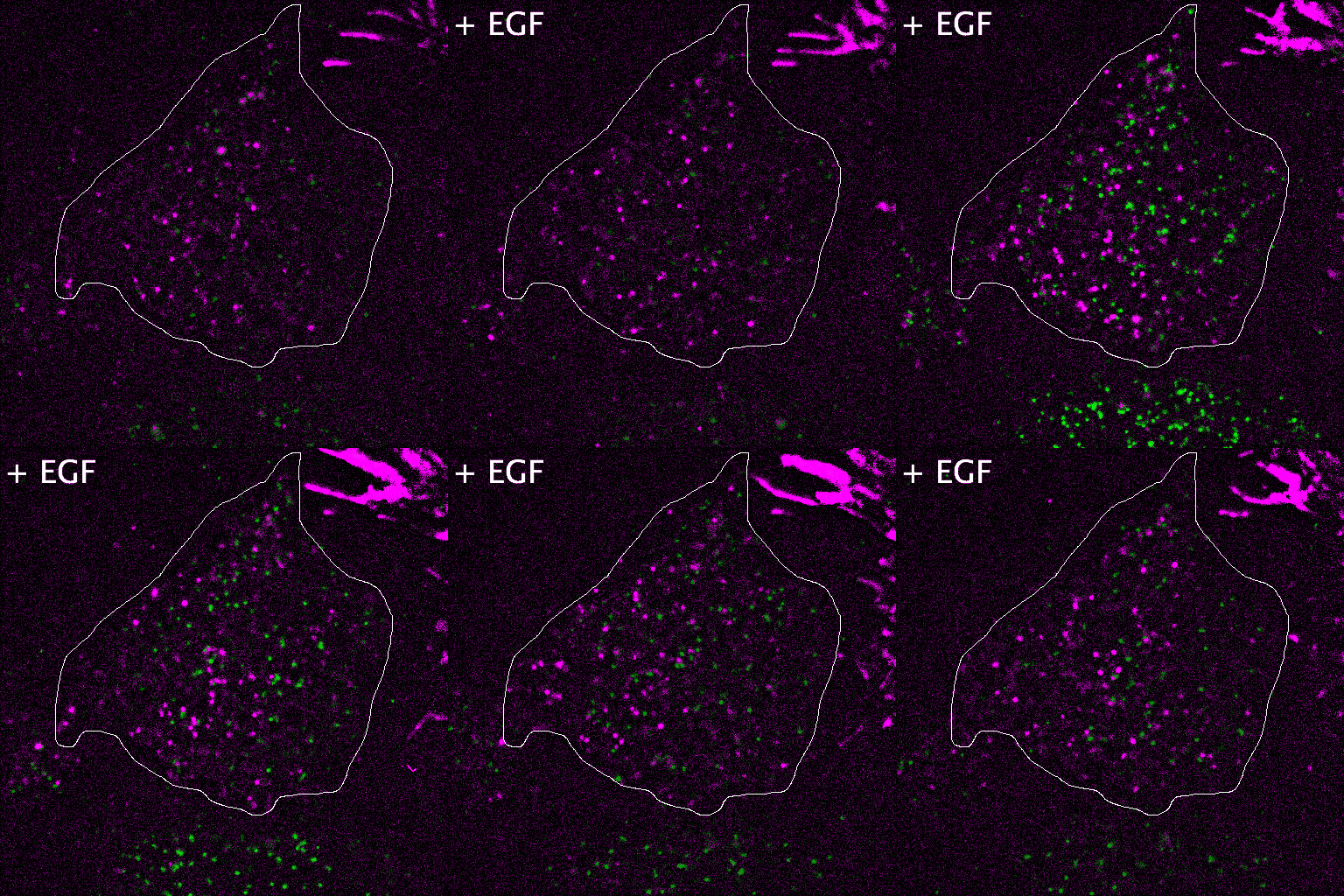
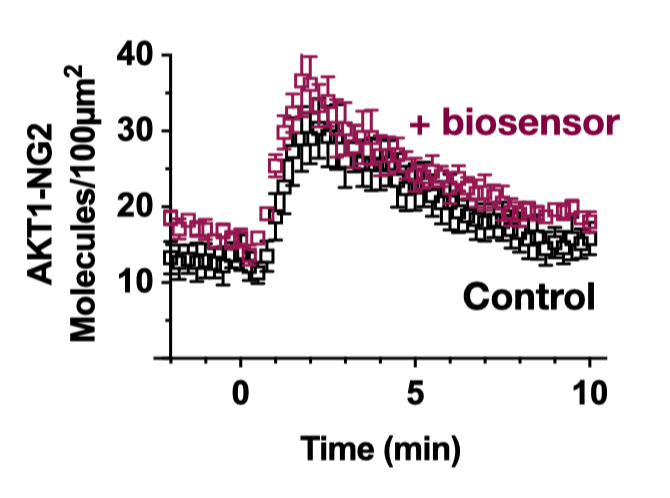
Since this occurs because the biosensor is outcompeting the native AKT1 molecules, Victoria tried expressing biosensors at lower levels where we resolve single biosensor molecules (shown in magenta). Hey presto! No inhibition:
We quantified it here:
As an added bonus, the quantitative data reveals superior properties of these single-molecule-level biosensors:
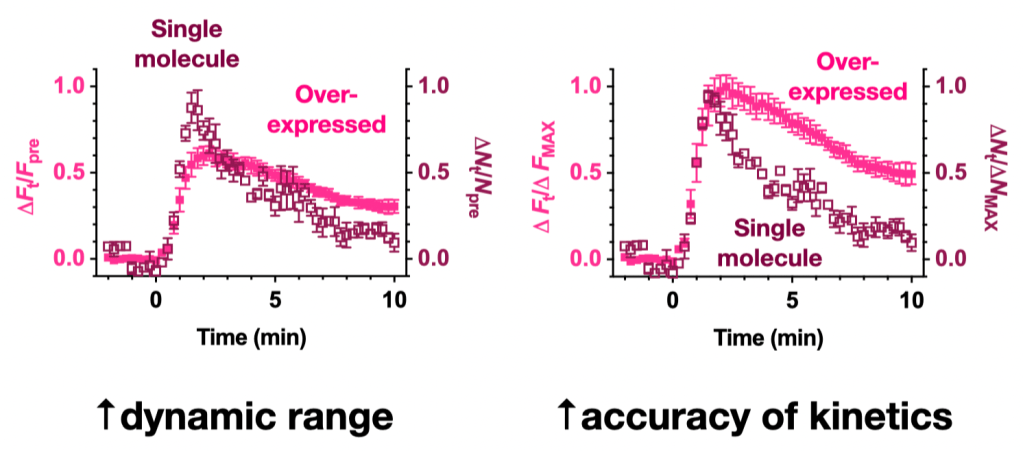
In short, over-expressed genetically encoded lipid biosensors can outcompete native effector proteins, blocking them. You can read the paper here.
Bear in mind, this is PIP3 signaling, for which cells use an exceptionally low level of lipid (hundreds of thousands per cell). This is not necessarily true for more abundant lipids
 Hammond Lab